Gaming Interface Energy and Progress Bar
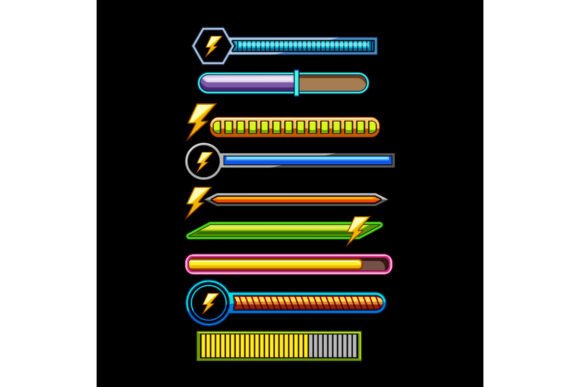
Gaming Interface Energy and Progress Bar is a set of UI elements designed to enhance user engagement and provide clear visual feedback in digital projects. These elements, including colorful progress bars and status indicators with lightning bolt icons, are essential for creating immersive and intuitive experiences across games, apps, and interactive platforms.
What makes these interfaces compelling is their ability to communicate progress, energy levels, or task completion in a visually appealing way. Whether it's tracking a player's stamina, showing mission completion, or indicating system status, these components add clarity and visual interest to any digital product.
Understanding the Core Elements
The Gaming Interface Energy and Progress Bar typically includes a range of visual components that work together to convey information effectively. At the heart of this set are progress bars, which show how much of a task has been completed. These bars can be styled in various ways—horizontal, vertical, circular, or even animated—to suit different design needs.
Status indicators, often paired with lightning bolt icons, signal important states such as energy levels, cooldowns, or active tasks. The use of color coding helps users quickly understand the current state of a system without needing to read text. For example, a green lightning bolt might indicate an available action, while a red one could signal a cooldown period.
These elements are not just functional; they also contribute to the overall aesthetic of a game or application. A well-designed progress bar can elevate the user experience by making interactions feel more dynamic and rewarding.
Creative Possibilities and Applications
Designers and developers can leverage Gaming Interface Energy and Progress Bar in numerous creative ways. One popular application is in mobile and web games, where progress bars help players track their advancement through levels or missions. By using bold colors and dynamic animations, these bars can make the gameplay experience more engaging and satisfying.
Beyond gaming, these UI elements are useful in productivity tools, fitness apps, and educational software. For instance, a fitness app might use a progress bar to show workout completion, while a learning platform could use status indicators to highlight lesson milestones. The versatility of these components allows them to be adapted to a wide range of industries and use cases.
Another interesting approach is to integrate these elements into storytelling or narrative-driven experiences. A game with a branching storyline could use progress bars to show how close a player is to unlocking a new chapter, adding a sense of anticipation and achievement.
Adapting for Different Goals and Audiences
One of the strengths of Gaming Interface Energy and Progress Bar is its adaptability. Designers can modify the style, color scheme, and animation to match the target audience and platform. For example, a casual game aimed at younger audiences might use bright, playful colors and simple animations, while a professional tool for designers could feature sleek, minimalist designs with subtle transitions.
For marketers and content creators, these UI elements can be used to visualize campaign progress, social media engagement, or project timelines. A dashboard with progress bars can help teams track goals and stay motivated. Similarly, a blog or website could use status indicators to show content updates, encouraging regular visits from readers.
When working with different platforms, it's important to consider the technical limitations and design guidelines. On mobile devices, for instance, progress bars should be large enough to tap and easy to read at a glance. On desktop applications, more detailed animations and interactions might be appropriate.
Practical Tips for Effective Use
To get the most out of Gaming Interface Energy and Progress Bar, start by defining the purpose of each element. Ask yourself: What information do you want to convey? How will users interact with it? Answering these questions can help you choose the right design and placement for your UI components.
Consistency is key when using these elements across a project. If you're using a progress bar to show task completion, make sure it looks and behaves the same throughout the application. This helps users build a mental model of how the interface works, reducing confusion and improving usability.
Testing is another crucial step. Gather feedback from real users to see if the progress bars and status indicators are clear and effective. Adjust the design based on their input to ensure the final product meets their needs and expectations.
Conclusion: Enhancing User Experience with Visual Clarity
Gaming Interface Energy and Progress Bar offers a powerful way to improve user engagement and communication in digital projects. By combining functionality with visual appeal, these elements help users navigate complex systems, track progress, and stay motivated.
Whether you're a game designer, developer, marketer, or educator, incorporating these UI components into your work can lead to more intuitive and enjoyable experiences. With thoughtful design and practical implementation, Gaming Interface Energy and Progress Bar can become a valuable tool in your creative arsenal.